


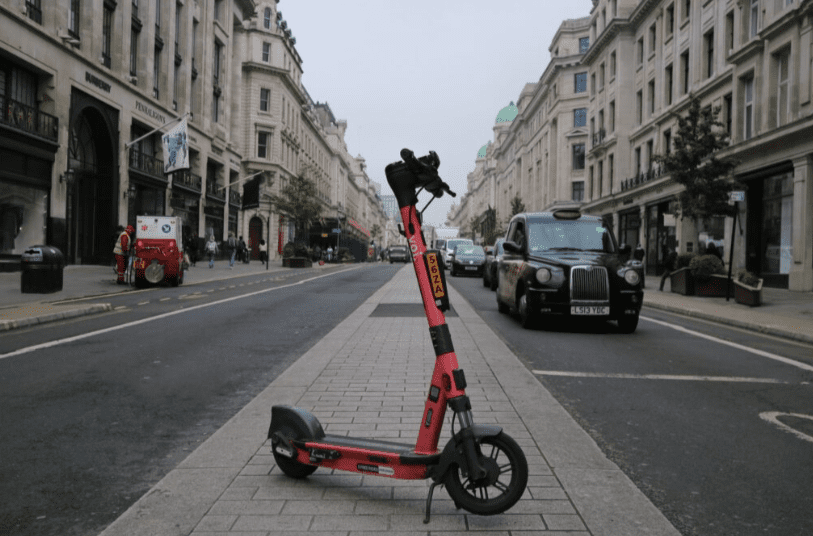
Shared mobility – the hiring of on-demand transport solutions such as ebikes and scooters is set to grow enormously over the next three years, offering a boom to DCB providers worldwide.
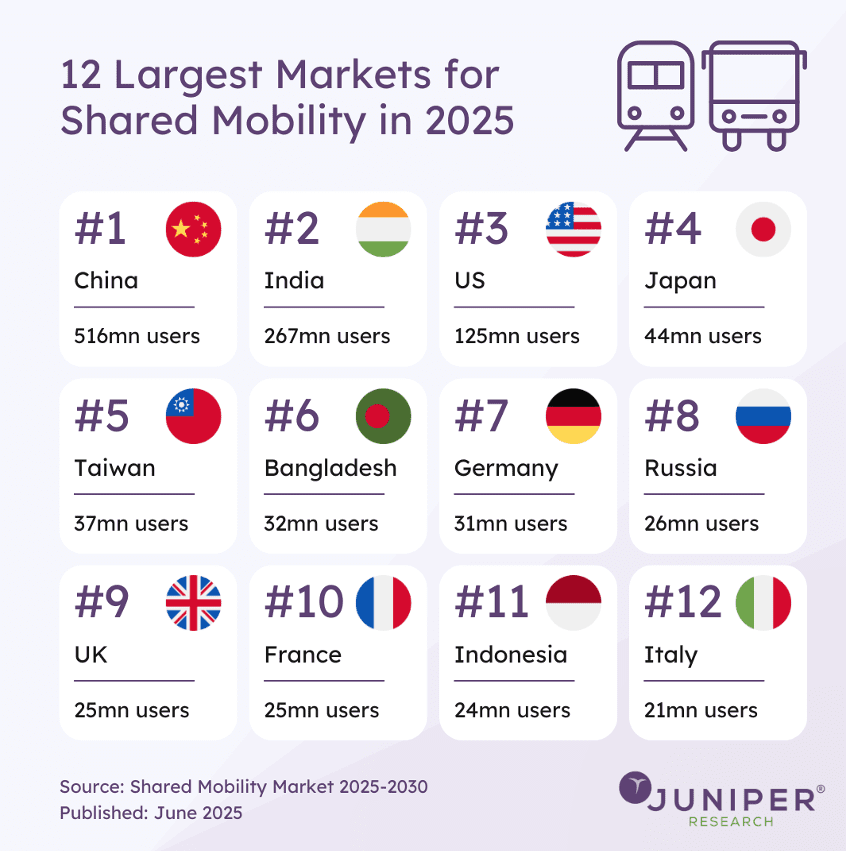
A new study from Juniper Research has revealed that the global userbase for shared mobility will grow 46% over the next three years; from 1.4 billion users in 2025 to over 2 billion in 2028.
This substantial growth will be driven by the rapid development of on-demand transportation solutions that encompass micromobility services into their platform.
The study identified that a key factor to this increasing usage is the integration of different micromobility options, such as escooters and ebikes, into existing ride-hailing apps.
However, the research observed that the integration of these privately owned platforms into public transport networks will continue to be a challenge, with effective public-private partnerships being key.
An extract from the new report, Shared Mobility Market 2025-2030, is now available as a free download.
The DCB connection
The rapid adoption of micromobility solutions will accelerate the demand for frictionless, secure, and inclusive payment methods. Carrier billing is poised to play a pivotal role, particularly for spontaneous and unbanked users, while alternative payment methods will remain essential to meet the diverse needs of a global user base. Operators that prioritize seamless payment integration will be best positioned to capture market share and drive user loyalty as the micromobility sector continues its explosive growth.
It is already being seen around the world, with the likes of Germany’s nextbike and Voi in the UK and mainland Europe already making waves in this nascent market.
nextbike, a leading bike-sharing provider in Germany, introduced carrier billing through DIMOCO to allow customers to pay for rides by charging the cost directly to their mobile phone bills. The rollout included a major advertising campaign in multiple cities and incentives such as cashback promotions for users on major networks like Telekom, Vodafone, and O2. The campaign led to increased customer satisfaction and boosted revenue, demonstrating strong uptake and effectiveness of DCB in the micromobility sector.
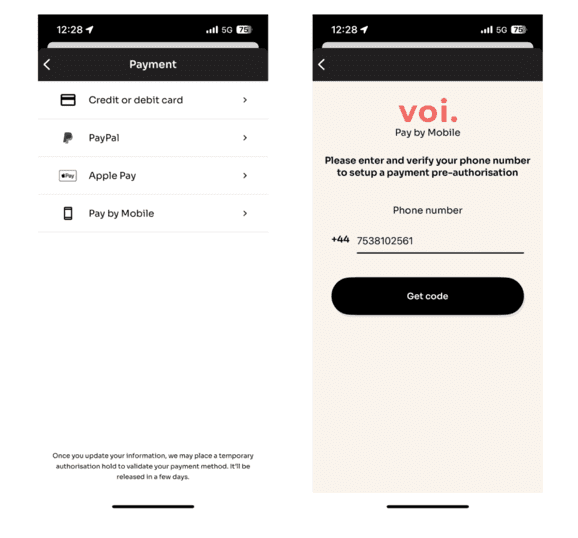
Voi, one of the largest escooter and ebike operators in Europe, partnered with Fonix to introduce mobile carrier billing for its users, starting in the UK. The Pay By Mobile solution enables riders to pay for their trips simply by charging the cost to their mobile phone bill, making onboarding and payment frictionless.
Voi and Fonix report that carrier billing can result in up to a 30% uplift in revenues without cannibalizing other payment methods, highlighting its appeal and effectiveness for micromobility payments
Micromobility significantly underutilised
The Juniper report, however, cautions that the underutilisation of micromobility options is preventing a fully multimodal market from emerging. Whilst escooters and ebikes can fulfil inner-city journeys for urban residents, a lack of integration and ownership by competing private brands is limiting their potential.
Report author Thomas Wilson adds: “In the short term, micromobility vendors must seek to adopt standards and pursue public/private partnerships to integrate services, to better serve public needs. Over the longer term, city authorities must work with shared mobility vendors to design true multimodal experiences, or congestion will not be effectively tackled.”
The report unearthed the importance of vendors making micromobility solutions more accessible in urban environments. For example, implementing additional designated vehicle pick-up/drop-off zones, or siting docks for eScooters at common public transport hubs, will enable users to travel confidently without the need for private car ownership


