





More than one in four European consumers are likely to abandon a purchase if they cannot pay using their preferred method, according to new research that highlights the increasingly fragmented nature of the continent’s payment market.
The How Europe Pays study, commissioned by Nuvei and conducted by Sapio Research, surveyed 5,000 consumers across the UK, Germany, Italy, Poland and Benelux during July 2026. It found that 27% of consumers are likely to abandon a transaction when their preferred payment method is unavailable, while 26% now expect websites to offer the way they prefer to pay. Almost one quarter – 23% – say the payment options presented by a business influence whether they take that brand seriously.
| Access the full report here and sign up to attend World Telemedia Marbella where payments and payment orchestration takes centre stage – get your pass here |
The findings suggest that payment choice is becoming a material part of the customer experience rather than simply a technical component of checkout.
Consumer behaviour is also more nuanced than a simple shift from cards to alternative payments. Some 67% of respondents tend to use the same method for most purchases, indicating deeply established habits. At the same time, 27% actively choose how to pay according to what works best for the particular transaction.
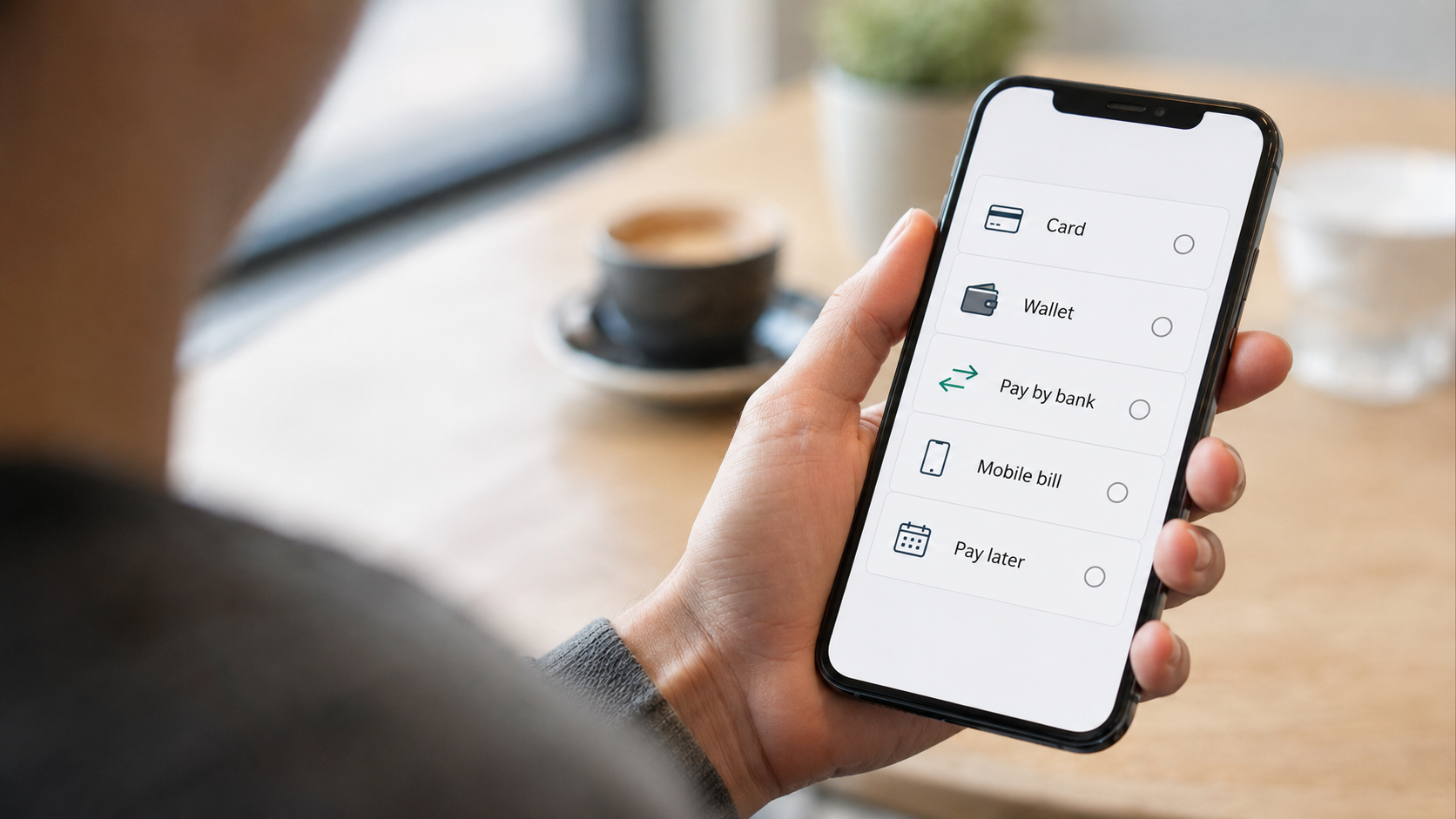
This means that consumers may maintain a small repertoire of trusted payment methods – potentially including cards, wallets, bank payments, buy now, pay later services and mobile-based options – and select between them according to the purchase, merchant or circumstances.
Five countries, five preferences
Preferences also differ significantly between European markets.
UK consumers are the most focused on control. Seventy per cent prefer to review and approve every purchase personally, while the same proportion tend to use the same way to pay. Just 15% are comfortable allowing an AI assistant to complete a purchase.
German consumers are more pragmatic. Sixty per cent say conventional card payments are sufficient, the highest proportion in the study, while 56% say payment options do not influence how they view a brand.
Italy and Poland place greater weight on the payment experience. In Italy, 30% expect websites to provide their preferred method and the same proportion may abandon a purchase if it is unavailable.
Poland is the most open to new payment services, with 45% comfortable adopting a new method as soon as it becomes available. However, Polish consumers are also the least tolerant of missing options: 31% are likely to abandon when their preferred method is absent.
Benelux consumers are more cautious adopters. Only 29% are comfortable using new payment methods immediately, compared with a five-market average of 39%, while 35% prefer to wait until people they know have adopted a service.
Agentic caution
The research also points to continued consumer caution around agentic commerce. Across the five markets, 67% want to review and approve purchases themselves and only 19% are comfortable allowing an AI assistant to complete a transaction. Almost half would prefer to observe how other people use purchasing agents before trying them.
Nuvei argues that although European payment infrastructure is becoming more connected through SEPA, Open Banking, instant payments and initiatives such as Wero, consumer expectations remain distinctly local.
For merchants and digital service providers, the immediate warning is that supporting payments across Europe is not necessarily the same as supporting the methods Europeans actually want to use.
We will examine the findings in more detail next week, including what the demand for multiple payment rails means for DCB, wallets, account-to-account payments and the wider telemedia ecosystem.
| Access the full report here and sign up to attend World Telemedia Marbella where payments and payment orchestration takes centre stage – get your pass here |