


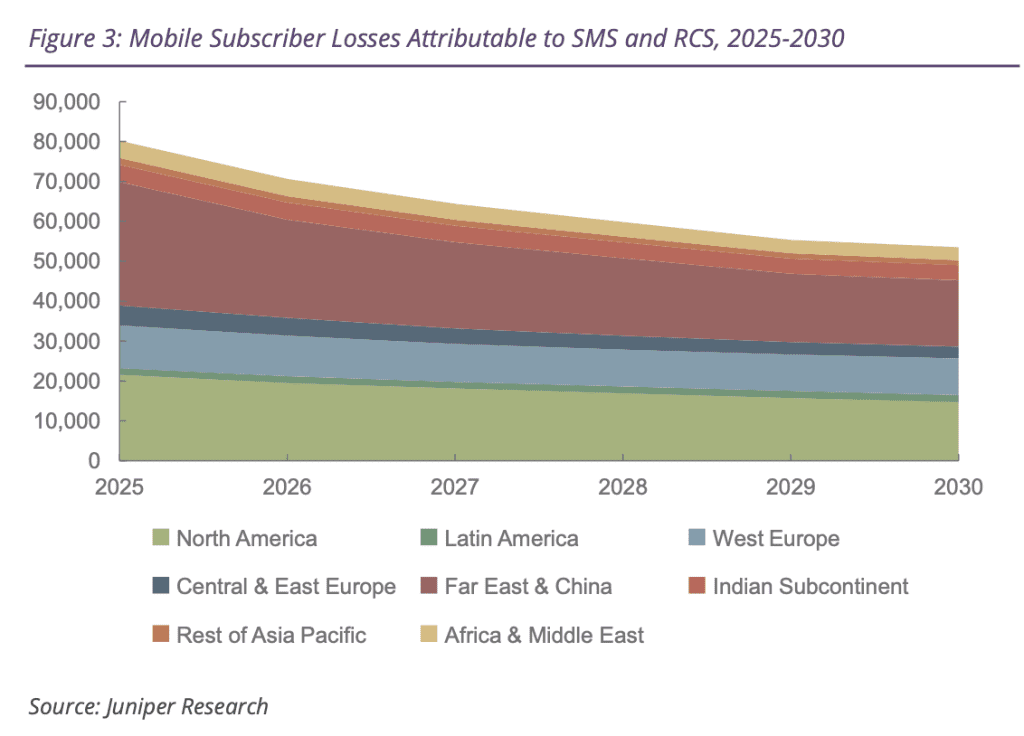
The value of subscriber losses arising from fraud over SMS will shrink by $9 billion next year. These losses include losses to tactics such as smishing and account takeover (ATO) fraud and represents a decline from $80 billion in 2025 to $71 billion in 2026 – or some 10%.
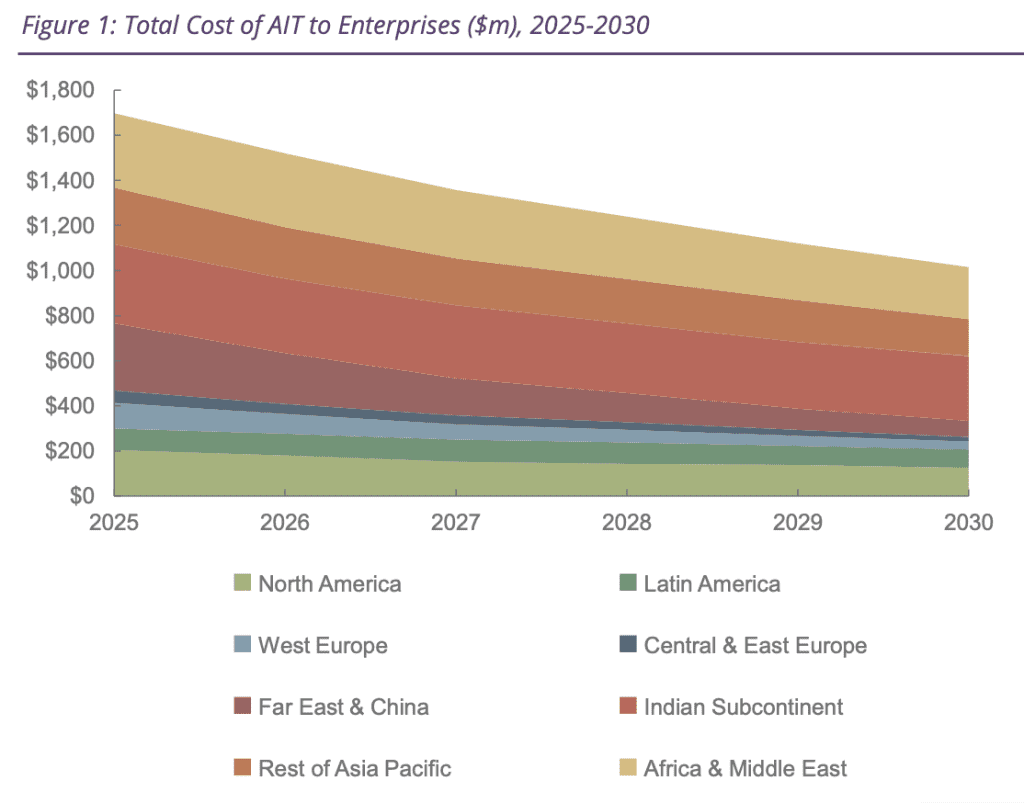
For operators, the growth in artificial inflation of traffic (AIT) continues to be a problem, however, the study attributed this to reduced demand for global SMS business messaging traffic, as the use of RCS and OTT messaging start to eat into SMS’s hegemony. However, these are now attracting their own new sophisticated frauds.
The drop in SMS fraud loss can also be attributed to enhanced firewall capabilities, which make it increasingly difficult for fraudulent actors to bypass detection systems, says Juniper’s report.
“The value of SMS is declining for fraudulent players. Diminishing message volume make it more difficult to conceal fraudulent traffic in legitimate traffic; driving up costs and eroding monetary gains for bad actors,” explains Ardit Ballhysa, Senior Research Analyst at Juniper Research.
An extract from the report, Mobile Messaging Fraud Prevention Market 2025-2030, is available as a free download.
AIT fraud on the rise

Source: Juniper Research
The growth in AIT over the past couple of years has been significant, with this form of messaging fraud now being the most prevalent in the SMS fraud ecosystem, says the study. AIT is typically carried out with bad actors deploying AI bots to mass-generated OTP requests on an enterprise’s website. Use cases commonly include creating new, fake accounts or triggering password resets. Mobile numbers, owned and controlled by fraudsters, are assigned to fake accounts for two-factor authentication (2FA), which receive OTPs from the enterprise to verify the identity of the account holder.
Enterprises must pay for additional A2P traffic, despite not receiving legitimate website signups or user engagement; resulting in additional operating expenses due to fraudulent behaviour. The profit for AIT is usually shared between bad actors and fraudulent or complicit mobile aggregators and, in some rare cases, mobile network operators (MNOs).
Messaging aggregators, with their influence over the SMS delivery chain, are fundamental to AIT as they can conceal the origin and destination of A2P SMS traffic. This allows messaging aggregators to send OTP and password reset requests to numbers owned or controlled by bad actors with reduced detection. Essentially, without fraudulent aggregators, the conditions for AIT would be severely diminished.
Removing fraudulent aggregators from the SMS chain is a priority for mobile operators and AIT prevention vendors. This must be achieved through MNOs streamlining their partnerships with messaging aggregators and completing regular checks to ensure that message delivery is satisfactory. MNOs should also consider conducting the role of a messaging aggregator themselves to further reduce the players involved in the messaging chain; lessening the probability for fraudulent activity on the chain.
RCS and OTT fraud grows

Given the enhanced capabilities and features that come with RCS and OTT messaging, bad actors can deploy more advanced fraudulent tactics. Examples of this include group chat or conversational spam (otherwise known as pig butchering), which is where fraudsters use AI chatbots to sustain long-term interaction with a victim to build trust before introducing fraudulent requests.
Bad actors can also take advantage of RCS and OTT features to evade detection from AI-based content filters by hiding malicious Uniform Resource Locators (URLs or Quick Response (QR) codes as pictures. One notable feature is end-to-end encryption (E2EE), which gives RCS and OTT users the much-needed privacy and security protection that SMS fails to offer. As E2EE messages are encrypted, however, MNOs, enterprises, or security platforms cannot inspect the messages contents for malware, phishing, or malicious URLs once the message leaves the sender’s device.
This means that some traditional network-based anti-fraud measures are not capable of dealing with threats hidden within RCS and OTT messages; giving fraudsters a new avenue of avoiding detection. As of writing this report, E2EE is not enabled on A2P RCS messages, but it is an issue that will need addressing if it is introduced in the future. Juniper Research suggests MNOs and enterprises focus particular attention on unusual metadata with AI and ML to detect atypical behaviour indicative of fraud, and examine the length of time the mobile number where the message originated from has been active. A typical strategy for bad actors is buying new mobile numbers specifically for their fraudulent activities.
Operators must still prepare for long-term fraud
However, Juniper Research warns operators that fraudulent players will evolve tactics to evade detection, even as messaging traffic declines. To stay ahead, Juniper Research believes that operators must implement firewalls with deep content inspection; enabling accurate detection of fraudulent links and media – capabilities that go beyond simply screening sender IDs.
“Deep content inspection will allow operators to identify emerging fraud patterns in real time. By analysing message content, rather than just the source, operators can not only block new fraud vectors faster, but also better protect subscribers as traffic shifts toward RCS. RCS provides richer media in messaging content, which opens the door to more sophisticated scams,” Ballhysa concludes.


